

A field guide to the
marsupials of medical writing
We’re digging deep for this field guide.
Our previous guides have focused on the feathered and the floral. This time, we’re turning to the furry with some pals from the land down under.
Most marsupials are linked by a common feature: a pouch where the female of the species carries their young until they are fully developed.
We’ll be exploring the unlikely links between these wonderful animals and the world of medical writing – whether it’s patient communications, research papers or guidance for practitioners.
Be warned: we’re far from experts on marsupials. We’ve even had to use a touch of artistic licence to give them all collective nouns. But we’ve been helping writers make tip-top writing choices for many a year.
If you ever struggle to compose clear and reader-friendly medical texts, pop this field guide in your pouch for future reference.
The marsupials of medical writing
Here's what you'll find in our guide. It's a celebration of creatures hailing from the country now known as Australia:





The first animals in our marsupial troupe are some friendly little folk from Western Australia:
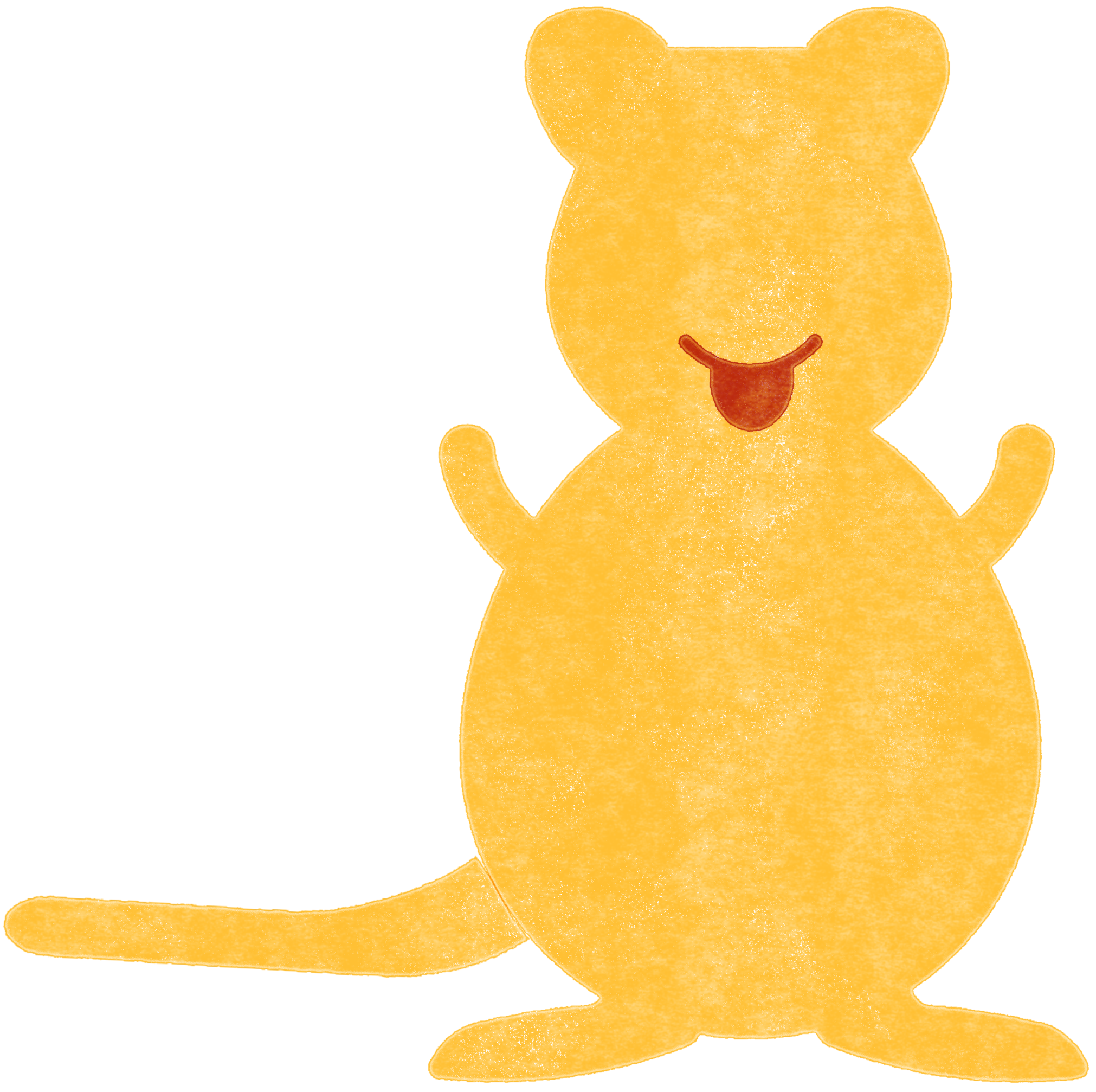
A quorum of quokkas
Once thought to be giant rats, quokkas have since pulled off a major rebrand. They now rank among the cutest and happiest critters on the planet, partly because their faces are set in perpetual smiles. They are also naturally social and inquisitive, always ready to charm nearby humans.
It’s safe to say that charm is often lacking in medical writing. It can be clinical (ha!) and unwelcoming, particularly to the inexperienced reader. Take, for example, a patient who is nervous about seeking help from the medical profession and whose health literacy is low.
Luckily, writers can follow the quokkas’ lead by considering how they come across to their readers and by seeking not only inform but also to connect. A smile, embodied in text by a friendly tone, can work wonders.
What can we learn from quokkas?
To build connection with an approachable writing style that factors in health literacy.
How do we do that?
Bring readers into the text with pronouns like “you” where you can.
Check for long, passive sentences that are stiff with formality.
Imagine you are having a conversation. Explain key concepts simply and try to anticipate the readers’ questions.
Offer empathy if it might be needed.
Family
Plain English wording
Key feature
Tonal fine-tuning
Habitat
In the words that welcome (and all those that follow)
Threats
Passive voice, lengthy sentences, professional formality in place of care
Onwards we go to the midnight rustlers made world-famous by a video game:
A crash of bandicoots
Bandicoots are small, nocturnal diggers with long, pointy noses. Although they are rarely seen by human eyes, their handiwork is often visible in the form of holes that appear overnight in suburban lawns.
Beyond holes, bandicoots also create complex tunnel systems, which protect them from predators and have multiple entrances and exits. Medical writers can take inspiration from this convenient set-up when they structure text, especially when information might be needed urgently (as health advice so often is).
Readers will benefit if they have several ways to access and navigate content. The days of reading from start to finish are long gone. So it pays to consider publication formats, headings, links, search options and the basic groupings that will get readers in and out of the text quickly.
What can we learn from bandicoots?
To dig pathways through content that enable access and action.
How do we do that?
Push yourself or your organisation to publish in multiple formats.
Overview the structure early on, and link through to sections in onscreen formats.
Pack headings with information so scanning for key information is easy.
Set out the tasks readers most want or need to complete, and prioritise that content.
Family
Plain English structure
Key feature
Ample access
Habitat
Underpinning the document’s architecture
Threats
Inaccessible formats, missing summaries or links, generic headings
Now we come to another group of tunnellers (and my personal heroes):
A wisdom of wombats
Wombats share some of the night-time antics of bandicoots and they too love a good dig. But this time we are going to find out what we can learn about design, not structure.
The ingenuity of the female wombat’s design is that her pouch faces backwards. So when Mother Wombat is furiously digging, Baby Wombat is sheltered from the accompanying shower of dirt. It’s an immensely practical physiological layout – and plain English design calls for similar practicality in the way we lay out content.
In the medical field, writers will likely need to think about how they position elements such as key advice or research findings, statistical data, photos, charts and other graphics. The design should ensure that all these elements support each other and that the reading order is clear.
What can we learn from wombats?
To place content carefully so readers are not left scrabbling in the dirt.
How do we do that?
If elements belong together, place them close to each other.
Don’t leave items to float. For example, tether headings to the text below them.
If elements have similar functions (such as navigation features), make them look similar.
Build a visual hierarchy and apply clear tags to show the reading order.
Family
Plain English design
Key feature
Practical positioning
Habitat
Shielded from the dirt and rubble of a poor design
Threats
Visuals that lack coherence, inconsistency in like elements, floating headings
The most famous of our cohort is known as the kuluwan in the local Darkinjung language:
A colony of koalas
Koalas are almost inseparable from another Australian icon, the gum tree, which is their main source of food. But even though hundreds of eucalyptus species grace the landscape, koalas tend to browse for leaves in only a select few. They choose what is familiar and suitable based on the season.
Medical writers must make similar choices when they’re searching for words to communicate with their readers. Their content must be both scientifically precise and couched in terms their audience will recognise and understand.
Of course, an audience of healthcare professionals might need something quite different from an audience of patients or one of researchers. Yet it’s worth remembering that all readers can benefit from plainer language. It lessens their cognitive load and saves that all-important resource: time.
What can we learn from koalas?
To nourish readers with words that are both familiar and precise.
How do we do that?
Find everyday alternatives (“heart attack”) to unfamiliar terms (“myocardial infarction”) as long as they carry the correct meaning.
If a word has no suitable alternative, explain it clearly on first use (and again, as needed).
Try not to equate using simple words with “dumbing down” because that’s not the aim and it doesn’t give readers their due.
Family
Plain English wording
Key feature
Focused familiarity
Habitat
In the foliage that adorns and enriches each sentence
Threats
Incomprehensible jargon, pointless complexity, words that fail to communicate
Next we arrive at some aerial acrobats – the gymnasts of the marsupial world:
A clan of sugar gliders
Sugar gliders cannot fly but, as the name suggests, they can glide through the air thanks to an in-built parachute of skin and membrane. They adjust their limbs and tail for balance to stay on course and stick the inevitable landing.
Balance is increasingly important for humans too as we are flooded with information that is not always accurate, authentic or fair. In a medical context, writing that lacks these elements can be misleading, if not downright dangerous.
Medical myths swirl around our communities, sometimes with serious consequences despite years of debunking. Patients – perhaps trusting, perhaps bamboozled – may grab the nearest AI-generated answer without checking the full story. So writers must take the time to synthesise research, explain findings and write it all up in a structure that promotes clarity and logic.
What can we learn from sugar gliders?
To present knowledge in a steady and even way so the message lands with readers.
How do we do that?
Learn about the biases that everyone can fall prey to and try to detect them in your own thinking – before you even start writing.
Give the “what” and the “why”. Explain your reasoning clearly and openly.
Chunk content neatly so it’s easy to digest.
Consider options, concessions and other variables that readers might need to know.
Family
Plain English structure
Key feature
Bat-winged balance
Habitat
Soaring above a landscape of misinformation and AI slop
Threats
Bias, assertions without evidence, long tracts of text
Finally, we have the Tasmanian “tigers” that were driven to extinction about 100 years ago:
A flame of thylacines
Thylacines were remarkable animals with the shape of a dog and the stripes of a tiger – although they were related to neither. Of course, female thylacines also had the all-important marsupial pouch.
Let’s focus on those distinctive stripes as our final link to medical writing. Often in a health context, it’s important to set specific content apart from the pack, and we can use distinctive design elements to do that.
An effective design will point readers to the most important information, whether that’s the outcome of a patient study, the recommended dose on a bottle of medicine or a note of warning on some online health advice. And writers have a big design toolkit to draw from – font, lines, boxes, icons, shading and so on – although it’s probably best not to use them all at once!
What can we learn from thylacines?
To make important information distinctive in the content wilderness.
How do we do that?
Use layout elements to highlight the most important content, but test them with assistive technologies like screen readers.
Make considered choices about your font sizing and emphasis such as bolding.
Aim for prominence without forsaking cohesion or clarity.
Take extra care with colour and shading.
Family
Plain English design
Key feature
Intentional emphasis
Habitat
Springing forth from the surrounding text
Threats
Hidden recommendations, monotonous or wild layout options
A medical writing field checklist
Build connection with an approachable writing style that factors in health literacy.
Dig pathways through content that enable access and action.
Place content carefully so readers are not left scrabbling in the dirt.
Nourish readers with words that are both familiar and precise.
Present knowledge in a steady and even way so the message lands with readers.
Make important information distinctive in the content wilderness.